Google Ads for med spas: what the October 2025 drug rules allow, what gets disapproved, and what books patients
Since October 2025, US med spas can say Botox in Google ads but cannot bid on it without certification. The rules, the wording and what works.
A US med spa can now write “Botox” in Google ad text and on its landing page, but it cannot bid on “Botox” as a keyword without Google certification. That split came in with Google’s restricted drug terms update, enforced from 29 October 2025. Remarketing lists are also off for injectables, because Google treats injections as restricted health content for personalized ads.
This page is for med spa owners and managers in the US who run Google Ads or plan to. It sets out what the policies allow, what still gets ads disapproved, the wording and keywords that work inside the rules, and what a booked patient should cost. Campaigns aimed at the UK or Europe follow stricter rules, covered in their own section.
The short version
- Since Google’s October 2025 update, campaigns targeting the US, Canada or New Zealand may use prescription drug terms such as Botox in ads and landing pages without certification, in line with local law.
- Keyword-targeting those terms still needs certification. Botox, Dysport, botulinum toxin, semaglutide and tirzepatide are all on Google’s list of prescription drugs it monitors.
- Campaigns targeting other countries, including the UK and Germany, may not use prescription drug terms for promotion at all.
- Google’s personalized ads policy lists “injections” as restricted health content, so Customer Match and your own remarketing lists cannot be used to promote injectables.
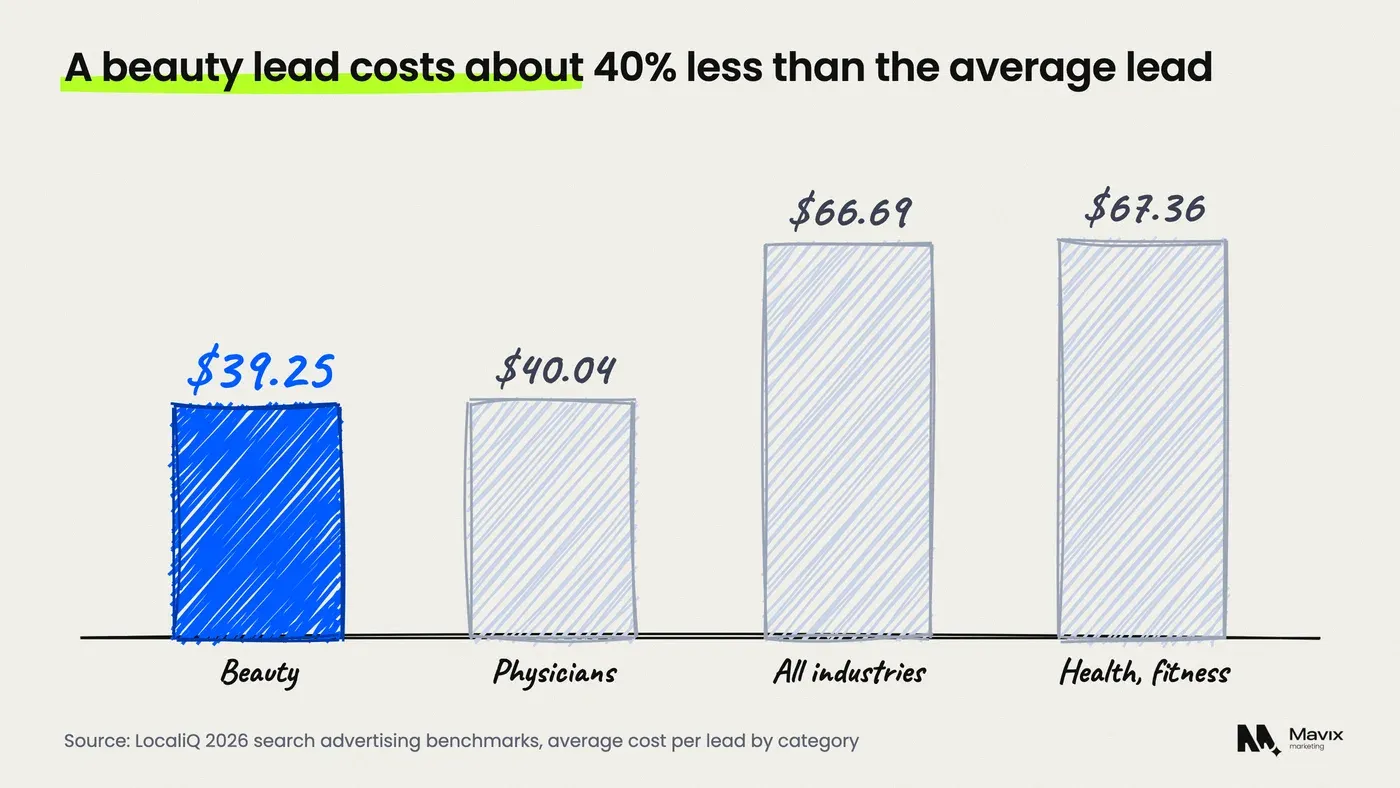
- In LocaliQ’s 2026 benchmarks, Beauty and Personal Care search ads averaged $4.62 a click, a 10.35 percent conversion rate and $39.25 a lead.
Can med spas advertise Botox on Google Ads?
Yes, in ad text and on landing pages for US campaigns, but not as a keyword without certification. Google’s restricted drug terms policy says campaigns targeting the US, Canada or New Zealand may use prescription drug terms for promotional purposes in line with local laws. Certification is not needed for ads and landing pages. It is needed to keyword-target those terms.
Botox counts as one of those terms. Google’s list of prescription drugs it monitors includes “botox”, “botulinum toxin” and “dysport”, and says the list is not exhaustive. Check filler and skincare brand names against it too, because a term missing from a non-exhaustive list can still be treated as a drug term.
The change is recent. Google announced it on 14 October 2025, with enforcement from 29 October ramping up over four to six weeks (Google Ads policy update). Much of the advice still online, saying med spas can never write “Botox” in an ad, was written before it.
What still gets med spa ads disapproved?
Five things, mostly keywords and audiences rather than ad copy. Under the October 2025 update, Google says it will warn at least seven days before suspending an account for a restricted drug terms violation. So a disapproval is a fix-it notice, not the end of the account.
| What you did | Why it is blocked | What to do instead |
|---|---|---|
| Bid on “botox near me” as a keyword | Keyword-targeting prescription drug terms needs certification | Bid on the treatment or the problem: “anti-wrinkle injections”, “forehead lines treatment” |
| Ran a “Botox” ad to a UK or German audience | Promotional drug terms are only allowed in US, Canada and New Zealand campaigns | Separate campaigns by country, with treatment-led wording outside North America |
| Added a remarketing or Customer Match list to an injectables campaign | Injections are restricted health content for personalized ads | Use location, keywords and Google’s predefined audiences |
| Sold weight loss injections through online consultations | Google treats that as telemedicine, which in the US needs LegitScript accreditation and Google certification | Advertise the in-person consultation, or get certified |
| Promoted hCG for weight loss | hCG for weight loss is on Google’s unapproved substances list | Remove it from ads and landing pages |
The table shows that most blocks come from targeting choices, not from the words in the ad. The last two rows come from Google’s healthcare and medicines policy, which also says US telemedicine providers must be accredited through LegitScript’s Healthcare Merchant Certification Program.
Why can’t med spas use remarketing for injectables?
Because Google’s personalized ads policy puts “invasive medical procedures, including cosmetic surgery, surgical procedures, or injections” in its restricted health category (Google Ads Help). Ads promoting that content cannot use advertiser-curated audiences: Customer Match, your data segments (your remarketing lists), audience expansion and lookalike segments.
In practice that means:
- No chasing site visitors with injectable ads. A visitor who read your Botox page cannot be shown a Botox ad later from your remarketing list.
- No uploading your client list to target past patients with filler offers.
- Predefined Google audiences still work, along with keywords and location, because Google says those are built without sensitive signals.
Google’s fix options are to remove the audiences, change the content, or appeal. For past patients, email and text to people who have agreed to hear from you do the job remarketing cannot. Non-injectable services, such as facials or skincare products, sit outside that line, so they can be run as separate campaigns.

What keywords should a med spa bid on?
The treatment, the problem and the place, written the way patients search. A prescription drug brand name cannot be keyword-targeted without certification. So build campaigns around what the patient wants fixed and the treatment name that is not a drug term. Then let the ad text and landing page name the brand.
- Problem keywords: forehead lines treatment, crow’s feet treatment, jawline contouring.
- Treatment keywords: anti-wrinkle injections, lip filler, chemical peel, laser hair removal, microneedling.
- Place modifiers: add your city and “near me” to each.
- Negatives from day one: jobs, training, course, certification, salary, DIY, at home, and the names of nearby competitors.
- One ad group per treatment, each sending clicks to that treatment’s page, not the homepage.
Check every new keyword against Google’s prescription drug list before adding it. Brand names change and new products arrive, and the list is not exhaustive.
What should a med spa Google ad say?
The treatment, the price or “from” price, who does the treatment, and how to book. Since October 2025 a US ad can name Botox or Dysport. A line such as “Botox, priced per unit, by a nurse injector” is within Google’s policy, as long as the price and claims are true and lawful in your state.
Wording that works inside the rules:
- Name the clinician: “Treatments by a registered nurse” or “physician-led” if true.
- State the price or a “from” price. Shoppers compare.
- Offer the low-commitment step: “Free 15-minute consultation” or “Book a skin assessment”.
- Avoid promised results: no “look 10 years younger” or “guaranteed”. Results vary, and a claim you cannot back is a risk with regulators as well as Google.
The landing page has to match. One page per treatment, with prices, the clinician’s credentials, real before-and-after photos you have consent to use, and a booking form above the fold. The plan post on med spa treatment pages covers what goes on each one.
How much do Google Ads cost for a med spa?
About $4.62 a click and $39.25 a lead, if your account looks like LocaliQ’s 2026 Beauty and Personal Care benchmark, which also showed a 10.35 percent conversion rate (LocaliQ). That category includes salons and other beauty businesses, so injectables keywords in a busy city usually cost more.
A worked example at those benchmarks, assuming one in three leads books and attends:
- $3,000 a month buys about 649 clicks.
- At 10.35 percent, that is about 67 leads.
- If one in three books, that is about 22 new patients, at about $118 each.
The American Med Spa Association’s 2024 report put the average spend per visit at $527 and the share of repeat patients at 73 percent (AmSpa). On those figures, a $118 patient pays back on the first visit, and the repeat visits are where the profit is.
For more med spa figures with their sources, see the med spa marketing statistics. To set a budget from your own numbers, use the Google Ads ROI calculator.
How do Google Ads rules differ for med spas in the UK and Europe?
They are stricter. Google’s restricted drug terms policy says campaigns targeting any location other than the US, Canada and New Zealand may not use prescription drug terms for promotion in ads or landing pages. Only certain certified businesses, such as online pharmacies, may keyword-target them.
For a clinic in London or Berlin, that means no “Botox” in the ad and no “Botox” on the page the ad points to. Write about the concern and the consultation instead: “anti-wrinkle consultation” or “forehead lines treatment”. Run European locations as separate campaigns from US ones, with separate landing pages, so one policy does not trip the other. National advertising rules on prescription medicines also apply, so check them with your regulator.
When Google Ads is the wrong first spend for a med spa
Google Ads works when people search for the treatment. It works less well for treatments people discover by seeing them, where Meta’s image and video ads often fit better, and for a clinic that cannot answer enquiries quickly.
- Slow replies. A form answered the next day loses the patient who booked elsewhere the same evening. The plan post on speed to lead covers response times.
- No reviews. Searchers compare star ratings before they click a booking button.
- Clicks but no bookings. Work through why Google Ads clicks bring no leads before raising the budget.
- Demand created by visuals. For new treatments, Meta ads for med spas may be the better first test.
Clinics with steady search demand often get more from the map listing and treatment pages first, which med spa SEO covers. If you would rather have the campaigns built inside the rules, see Google Ads for med spas.
Questions people ask about Google Ads for med spas
Do med spas need LegitScript certification for Google Ads?
Not for most US advertising. Since the October 2025 update, US campaigns can use prescription drug terms in ads and landing pages without certification. You need certification to keyword-target those terms, and US telemedicine providers, such as clinics prescribing weight loss medication online, need LegitScript accreditation and Google certification to advertise those services.
Can I advertise Ozempic or semaglutide at my med spa?
Only with care. Ozempic, semaglutide and tirzepatide are on Google’s prescription drug list, so you cannot bid on them as keywords without certification. Naming them in US ad text is allowed by Google’s policy in line with local law, but online prescribing counts as telemedicine and needs certification. Compounded versions raise legal questions to check with your own counsel.
Why was my med spa ad disapproved after the October 2025 change?
Usually because of a keyword or an audience, not the ad copy. Check the policy named in the disapproval. If it is restricted drug terms, look for a drug brand in your keywords. If it is personalized advertising, remove remarketing, Customer Match and lookalike audiences from the injectables campaign, then request a review.
Can a med spa use before and after photos in Google Ads?
Google search ads are mostly text, so before and after photos appear on the landing page rather than in the ad. Use real photos of your own patients, with written consent, taken in the same light and pose. Make clear that results vary, and avoid editing that changes the result, since a misleading image is a risk with regulators as well as with Google.
How much should a med spa spend on Google Ads a month?
Start from the patients you want. At LocaliQ’s 2026 beauty and personal care averages, $3,000 a month buys about 67 leads, and 22 new patients if one in three books. Below about $1,500 a month, a single treatment campaign in one city is usually the better test than spreading thin across every service.
Can med spas run Performance Max campaigns?
They can, but Performance Max relies heavily on audience signals, and the personalized advertising rules remove the remarketing and customer list signals for injectables. A search campaign built around treatment keywords gives more control over which searches you pay for. Test Performance Max for non-injectable services and products first.
The bottom line
Rewrite US ads to name the treatment and the brand, now that Google allows it, and keep brand names out of the keyword list unless you are certified. Strip remarketing and customer lists from injectables campaigns, build one landing page per treatment, and judge the account on cost per booked patient against a $527 first visit.
If your med spa ads keep getting disapproved, or get clicks without bookings, get your med spa Google Ads account checked for free. You get a written list of policy risks and wasted spend, usually within one working day.
Free review
Want this looked at on your own site?
Send the address. A person reads it and writes back with the two or three things that would move your enquiry number first. Free, and yours to keep whether you hire us or not.